Part of the world behind The City Series, Alan Chow's corporate fantasy universe.
The Ironforge District
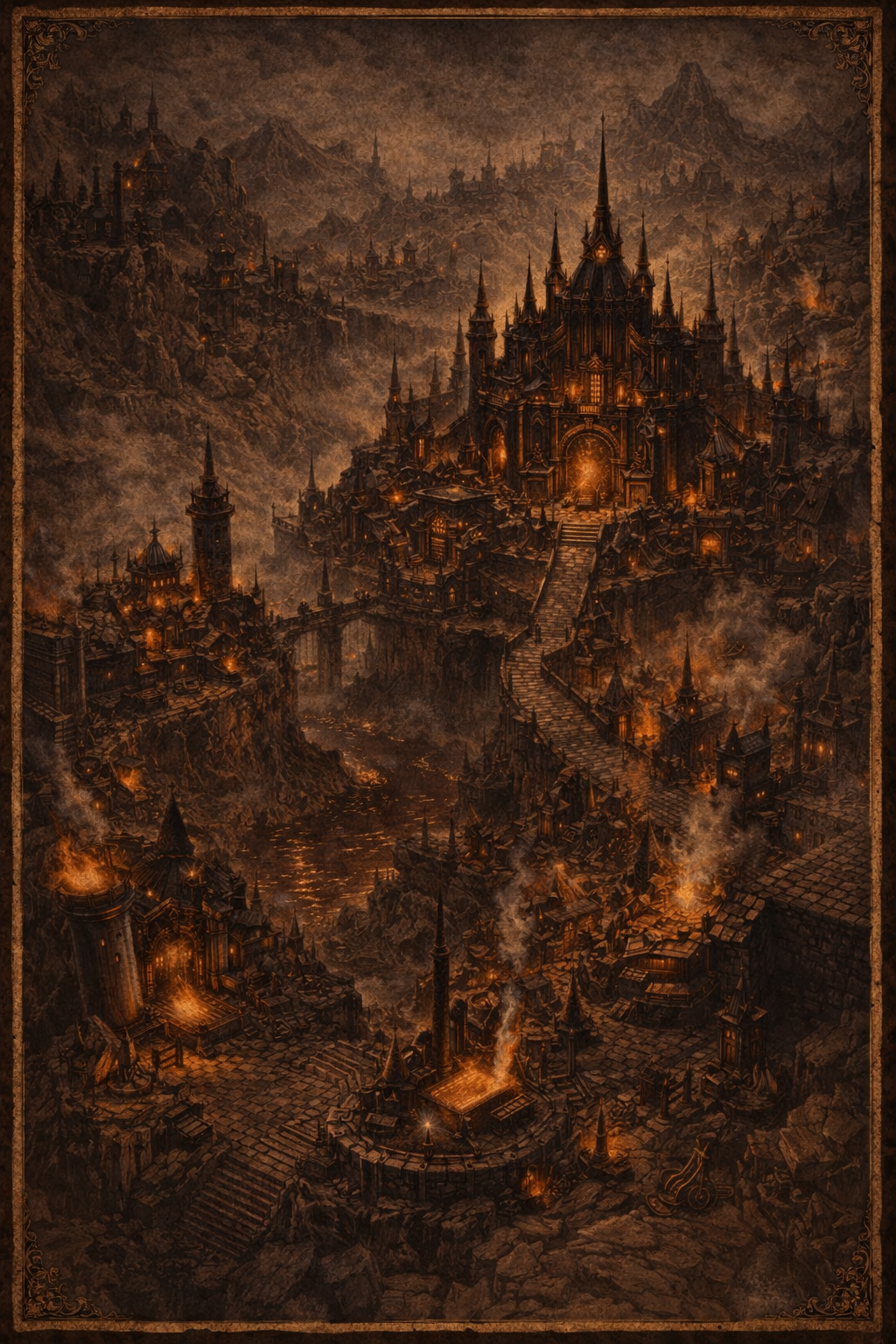
In the eastern part of the City, the Ironforge District is its industrial heart. It features the bulk of the City's factories, manufacturing facilities, and mines. There are also businesses that provide essential services like food and laundry, which are aesthetically austere since their customers are rarely there for pleasure. The Ironforge District also provides plenty of cheap accommodation for workers to stay. Since many of such workers have short work contracts, they usually rent instead of buying them. After all, most can only tolerate the spartan conditions for less than a year.
While the surface has a general theme of pragmatism and dullness, the Ironforge District's underground is a whole different world. The vast majority of Dwarves live here, where they continue their tradition of living underground and built a sprawling paradise for work, play and everything else. The subterranean portion of the Ironforge District is so extensive that it represents almost 60% of the entire place. Apart from factories and mines, it has shopping malls, residential areas, and even parks that have their own artificial climate. It also features the most Dwarven gaming bars, where patrons from all races drink and wager on a variety of sports and games.
Legacy Factories
Factories built in the early days of the City are distinct from modern ones. They differ vastly in style, appearance, and function. Thanks to the initial resource boom during the City's founding days, the first factories were lavish and ornate masterpieces with top-of-the-line equipment and features. Dwarves built some of the earliest factories, but others soon joined in the race to construct factories that surpassed others in beauty and function.
The true price of building such factories is only evident much later. Pollution and smog render the legacy factories to a sad state of their former aesthetic glory. Factory owners face a painful dilemma over whether to repair or replace them. Many legacy factories are eventually converted into museums or restaurants.
Modern Factories
Modern factories learnt from the lessons of legacy ones. Function and needs dictate the shape and form of modern factories. They favour practical designs, sparse decoration, and interiors designed for future modifications and retooling.
Modern industrial planners also group complementary factories together into integrated industrial ecosystems with shared supply chains, services, and residential areas.
The Mines
Virtually all mines are in the Ironforge District, where the richest ore veins in the City reside. These mines are massive and extend to the deepest recesses of the ground. Many continue operating thanks to new technologies and extraction techniques.
Defunct mines now serve many modern purposes, including hazardous equipment testing, vehicle trials, and large-scale underground storage facilities for sensitive historical materials.
Power Generators
The Ironforge District houses the City's primary power generation facilities. Manufacturers consume almost 60% of all electricity generated annually, making the district the core of the City's energy infrastructure.
The district is also home to the Primary Generator, an immense storage system capable of harvesting power from the deadly storm known as the Homemaker. The system now provides almost 70% of the City's yearly energy needs.